“n
BOGOTÁ.– On the eve of the decisive presidential runoff election day in Colombia, the Permanent Conference of Political Parties of Latin America and the Caribbean (COPPPAL) ratified its commitment to the defense of democratic values in the region and detailed the actions of its electoral observation mission in the country.
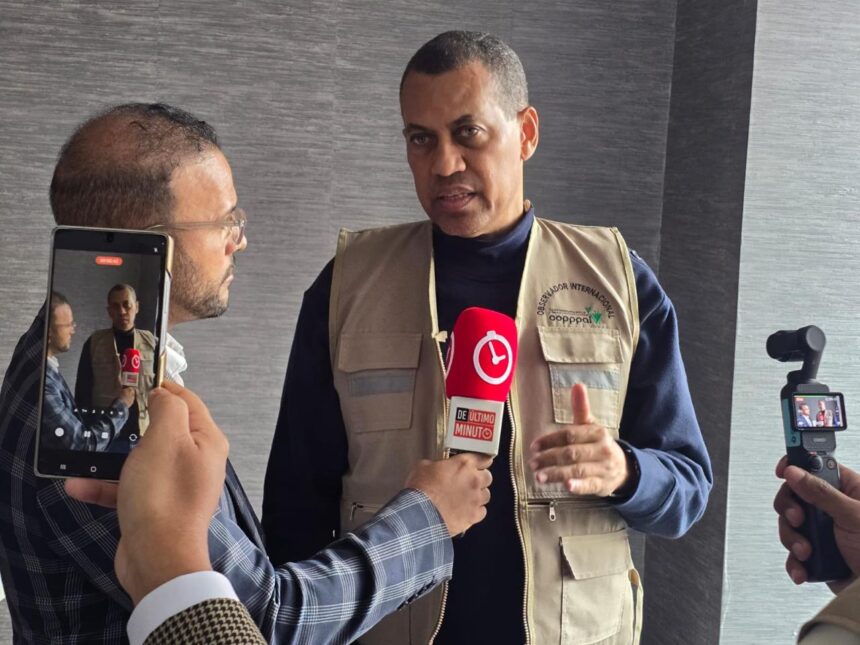
n” “nThe head of the COPPPAL observation mission, Guido Gómez Mazara, emphasized that the organization’s role is strictly one of observation, analysis, and assessment of electoral processes, always respecting the sovereignty of the host countries.
n” “n“I must reiterate that the spirit of COPPPAL is one of observation, of weighing the processes, of not interfering beyond observing the experience in a country like Colombia. It is evident that the profiles of both candidates serve to outline the characteristics of the electoral competition process,” stated Gómez Mazara, while recalling that the mission is resuming its work in this runoff with already known dynamics and actors.
n” “nMore Read

In a meeting with the members of the delegation to refine the details of the work plan, Gómez Mazara acknowledged the progress of the Colombian electoral system, although he stressed that democratic evolution is a continuous process.
n” “n“While it is true that the institutional mechanics, in the case of Colombia, have been advancing, there is evidently always much to learn and things to improve,” he pointed out.
n” “nRegarding this Sunday’s election day, he explained that the COPPPAL technical and political team will maintain a deployment at various polling stations, under a stance of absolute neutrality.
More Read

“The mechanics for this Sunday involve intervention at the polling stations, with an attitude of independence, distance, and observation, because what accredits us most as observers is the validation of an independent entity,” he pointed out.

Finally, the head of the mission highlighted the historical importance of international observation in the continent’s democratic systems.
n” “n“International observation has always been decisive in the specific case of our democracies, sometimes very fragile, sometimes very solid; we need that observer,” concluded Gómez Mazara, while expressing his satisfaction at participating once again in this process in Colombia.
n” “nWhat is COPPPAL?
n” “nThe Permanent Conference of Political Parties of Latin America and the Caribbean (COPPPAL) was created on October 12, 1979, in the state of Oaxaca, Mexico, by a group of progressive political parties from the region, led by Gustavo Carvajal Moreno, who at that time was the president of the Institutional Revolutionary Party (PRI).
n” “nCOPPPAL is a forum of political parties from Latin America and the Caribbean that brings together more than 60 parties from around 30 countries on the continent.
n” “nIn its Declaration of Principles, the organization defines itself as a space for democratic and progressive parties that prioritizes the issue of sovereignty, and advocates for a fairer and more equitable international order, as well as for the unity of Latin American peoples.
More Read

Likewise, said declaration establishes as its purposes the defense of democracy that guarantees the participation of majorities and minorities in the State’s decision-making, within a framework of legal certainty that respects public freedoms, the right to political participation, and ideological diversity.
n” “nCOPPPAL is composed of the following bodies: Plenary, General Coordination, Presidency, Vice-Presidencies, Executive Secretariat, Coordination of Commissions, Permanent, Special and Ad Hoc Commissions, Electoral Observatory, COPPPAL Women, COPPPAL Youth, and the Gustavo Carvajal Moreno Political Training Institute.
n”