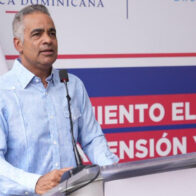
Santo Domingo.- The Director General of Internal Taxes, Pedro Urrutia, presented to the Association of Industries of the Dominican Republic the progress in digitization, simplification of procedures, and Electronic Invoicing, as well as the initial effects of Law 30-26
The General Directorate of Internal Taxes (DGII) presented the balance of its institutional transformation to the industrial sector, one of the most significant productive areas in the country’s economy.
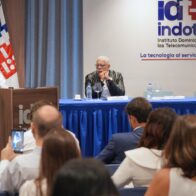
The Director General of the DGII was a speaker at the industrial meeting organized by the Association of Industries of the Dominican Republic (AIRD), where he presented the vision and perspectives of the tax administration for the industry.
During his speech, Urrutia stated that the Dominican tax system has become complex over time and that the institutional response requires a sustained agenda of process simplification and service digitalization.
The official insisted that the DGII cannot limit itself to collecting taxes, but must consolidate itself as an institution “that facilitates, allies with, and enables productive development.”

We recommend reading:CNDU urges the Chamber of Deputies to approve the amendment to the Solid Waste Law
One of the data points that anchored the intervention was the accelerated growth of Electronic Invoicing. The DGII reported more than 1.859 billion electronic fiscal receipts (e-CF) successfully issued as of July 1, 2026. The number of taxpayers registered as electronic issuers went from 23,686 in January of this year to 76,762 currently, that is, more than triple in just six months.
Linked to that progress, Urrutia reported that the institution is working on a draft General Rule -currently under public consultation- that would exempt taxpayers authorized as electronic issuers who invoice via e-CF from the 30% ITBIS withholding provided for in General Rule No. 02-05, a measure that the DGII itself framed as a direct relief for MSMEs.
The official also reported on the official simplification of 33 procedures and the elimination of 68 requirements, with more than 140 additional procedures under review. He also announced that, starting in August, the Virtual Office (OFV) will allow for the filing of technical inquiries and information requests with tracking and response through the same channel, which reduces the need for in-person management.

In parallel, he pointed out that the DGII and the Ministry of Finance and Economy are advancing in a project for digital integration and traceability of procedures between both institutions, conceived in two phases: integration of processes and digital traceability of requests.
Urrutia highlighted the performance of the institutional chatbot DIGI, available 24 hours a day on the mobile application, the Virtual Office, the institutional portal, and the Electronic Invoicing platforms, which recorded more than 150,000 interactions in June alone.
It also reported the strengthening of the contact center, the optimization of telephone support, and improvements in taxpayer identification for more personalized in-person service.
The speech also addressed the implementation of Law No. 30-26, on Pro-Economic Growth Measures, Fiscal Simplification, and Mitigation of the International Crisis.
Among its central points, Urrutia mentioned the facilities for tax debts applicable until December 31, 2026, the progressive reduction –and elimination in 2028– of the 2% Mortgage Registration and Conservation tax, and the repeal, starting in 2027, of the 1% for company incorporation and capital increases.

The director of the DGII concluded his speech with a call for co-responsibility between the State and the productive sector: “When industry grows, the economy grows, opportunities grow,” a phrase with which he summarized the central message of his appearance before the Dominican industrialists.
AIRD highlights alliance with the DGII.
For his part, the president of the Association of Industries of the Dominican Republic (AIRD), Julio Virgilio Brache, highlighted that the relationship between the tax administration and the productive sector constitutes one of the pillars of national development, as it transcends the collection function to become a factor that promotes investment, strengthens formality, boosts competitiveness, and generates the necessary conditions for economic growth.