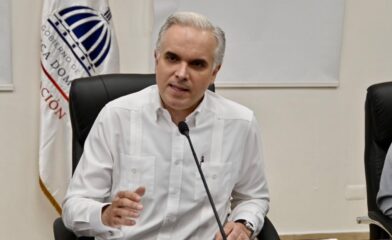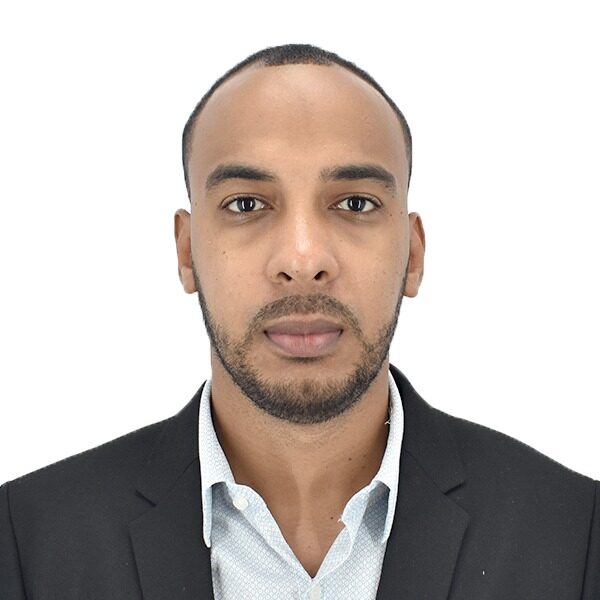
The Vice Minister of Hydrocarbons, Noel Báez Paredes, stated that the country has a confirmed oil system, although he emphasized that the current challenge lies in determining the economic profitability of its potential exploitation through advanced geological and geophysical studies.
During his participation in the program “Aula del Saber”, of the Social Management Directorate, in collaboration with Universidad APEC (Unapec), with the conference “Advances and perspectives of the electrical and mining system in the Dominican Republic”, Báez explained that, through strategic alliances and oil rounds, the State seeks to attract foreign investment to explore sedimentary basins both terrestrial and marine.
“In the Dominican Republic there is an oil system, but its profitability must be determined,” Baez emphasized. He recalled that between 2019 and 2021 the SP2 offshore block was awarded to the Apache company, which was later abandoned because the company prioritized its operations in the Guyana-Suriname basin, in whose exploration phase it invested US$16 million only in seismic studies, which exemplifies this critical and high-cost stage for the sector.
The official emphasized that, while moving towards a cleaner matrix, hydrocarbons play a crucial role as a “transition bridge” for the implementation of renewable energies. “We need to explore whether we have our own sources that allow us to reduce total dependence on imports, especially in the face of a volatile international political scenario,” he said.
He also highlighted that the strengthening of the National Hydrocarbons Database is an essential public tool for investors to analyze the geological structure of the Dominican subsoil and that it is available to all interested parties.
More Read

Meanwhile, the Vice Minister of Energy, Ricardo Guerrero, highlighted the transformation of the national electricity system in the last five years, including the diversification of the matrix, in which renewable energies have had a notable growth.
“Renewable energies are not a fad or whim; they are a necessary reality,” Guerrero expressed, despite geographical and environmental limitations for their expansion.

He cited that solar and wind capacity quadrupled, exceeding 2,000 megawatts (MW) and increasing its share from 11% to 29% of the national installed capacity. This, he assured, signifies greater energy diversification, less external dependence, and a real energy transition towards cleaner sources.
More Read

He also highlighted that the electrical modernization focuses on storage and stability, projecting the entry of more than 400 MW in batteries between 2026 and 2027. This technological robustness, he affirmed, is complemented by the expansion of the hydraulic infrastructure, which function as catalysts for social and territorial development.
Meanwhile, MEM advisor Joel Ramírez pointed out the potential of rare earths in Pedernales, critical minerals for modern technology, with confirmed deposits exceeding 150 million tons and levels of purity of high international competitiveness. Resources are expected to be declared this year.
Representatives from Energy and Mines announced that the Dominican Republic is in the focus of the international agenda, not only for its energy potential, but also for the interest in rare earths, a topic that will be addressed at the First International Forum on Rare Earths (May 27 and 28) and the XI Energy Week of Olacde.
Regarding this, the rector of APEC, Erik Pérez Vega, valued hearing firsthand the advances and challenges of the mining and energy sector of the country, especially in a global context marked by energy transformation, technological innovation, and environmental challenges.
“It is essential to generate spaces for reflection that allow a better understanding of these processes and contribute to the construction of sustainable solutions, as the energy sector and the responsible use of mineral resources are fundamental pillars for economic growth, competitiveness and the sustainability of our country,” Pérez highlighted.
The activity was attended by, on behalf of the MEM, the director of Social Management, Vladimir Ozorio, as well as representatives of the National Congress, academic authorities, teachers, students and special guests.