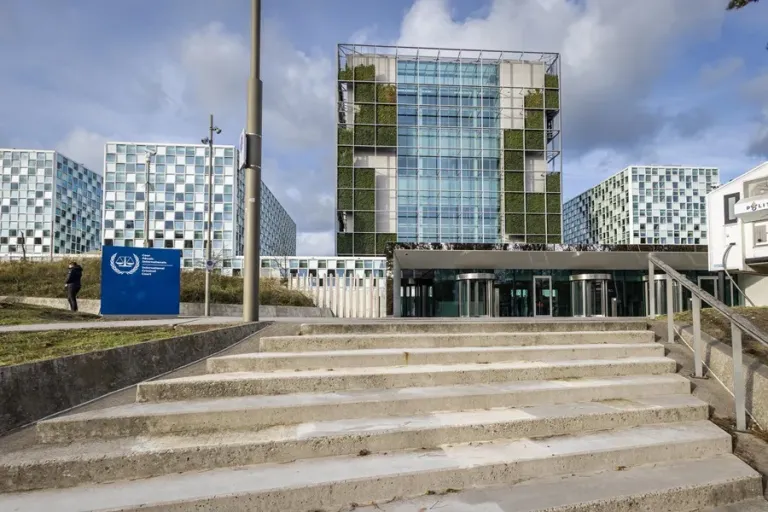
Washington.- The United States government celebrated this Saturday Venezuela’s decision to withdraw from the International Criminal Court (ICC) and took the opportunity to redouble its criticism against the tribunal, which it once again described as “corrupt,” “worthless,” and lacking credibility.
In a statement, the State Department welcomed the decision announced by the acting president of Venezuela, Delcy Rodríguez, and assured that the new Venezuelan government joins the efforts led by Washington to “dismantle” the Court.
“The ICC has been ‘investigating’ Nicolás Maduro since 2018 without any results,” stated the State Department, which accused the court of allocating resources to investigate and prosecute citizens of countries with “competent and independent” judicial systems that never accepted its jurisdiction.
According to Washington, that action constitutes a display of “overreach,” “political bias,” and “selective application of justice.”
“Not credible”: US Government
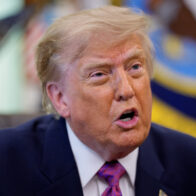
The administration of President Donald Trump highlighted that Maduro, detained in the United States, now faces American justice for the crimes he allegedly committed and concluded the statement with a call for all States Parties to abandon the Rome Statute, the founding treaty of the ICC.

The U.S. reaction came one day after the Venezuelan government announced its “firm and irrevocable” decision to denounce the Rome Statute and initiate the process of withdrawing from the Court.
We recommend reading:
Venezuelan Foreign Minister Félix Plasencia maintained that the ICC has focused its investigations in a “disproportionate” manner on African and Latin American countries and accused the court of acting with a bias that responds to interests outside of justice.
More Read
As explained, per Rodríguez’s instructions, the decision has already been communicated to the United Nations Secretary-General, António Guterres.

The acting president also accused the Court of having accumulated a history of actions directed against the countries of the so-called “global south” and argued that Venezuela is committed to international justice based on respect for sovereignty and international law.
The ICC’s response
For its part, the ICC regretted the Venezuelan decision and recalled that the withdrawal will not have an immediate effect.
The court noted that, in accordance with the Rome Statute, Venezuela will remain a State Party for one year from the formal notification and must continue to cooperate with the investigations and proceedings already initiated.
The investigation into alleged crimes against humanity in Venezuela has remained open since 2018, following a referral submitted by several States, and focuses on events that occurred since 2017.
Although the then-government of Nicolás Maduro tried to halt the process by claiming that the Venezuelan justice system was investigating those crimes, the Court authorized the resumption of the investigations in 2023.

The origin of the tension between the U.S. and the ICC
The U.S. position regarding the ICC is historically tense. The United States never ratified the Rome Statute and maintains that the court lacks jurisdiction over U.S. citizens.
During his first term, Trump imposed sanctions against Court officials for investigating potential war crimes committed by U.S. forces in Afghanistan.
Although those measures were subsequently lifted by President Joe Biden, Washington continued to reject any attempt by the ICC to exercise jurisdiction over citizens of countries that are not part of the court.
In his second term, Trump resumed a confrontational stance with the Court, especially following actions related to Israel, and has insisted that the institution acts with political motivations and exceeds the mandate for which it was created.