Mexico City.- After the U.S. justice system sentenced drug trafficker Ismael ‘El Mayo’ Zambada to life in prison, Mexico continues to face the bloody internal war triggered by his arrest within the Sinaloa Cartel, while it has reignited the controversy with Washington to demand clarification on the role it played in his controversial capture.
On July 25, 2024, the historic co-founder of the Sinaloa Cartel landed in Texas, accusing one of the sons of his former partner Joaquín ‘El Chapo’ Guzmán of taking him to the U.S. by force.
The then-president of Mexico, Andrés Manuel López Obrador (2018-2024), requested a full report from Washington to determine if its agents intervened in the neighboring country, despite the version they provided him being that there was no U.S. participation in the arrest of El Mayo.
That was always questioned by Mexico and now, two years later, the controversy has grown due to the recent donation by the Federal Bureau of Investigation (FBI) to a museum of the plane in which the drug trafficker was transported to the United States.
This circumstance led the current head of state, Claudia Sheinbaum, to maintain, following the sentencing of Zambada, that the U.S. involvement in his arrest is “obvious,” while weeks earlier the Attorney General’s Office (FGR) had sent new requests for information to clarify the facts.
More Read

An arrest that the Government “cannot let slide”
For security analyst David Saucedo, the controversial arrest of El Mayo nearly two years ago is something that the Sheinbaum administration “cannot let slide,” as it involves “the capture of a Mexican national on Mexican territory by United States agents.”
“This is something that the different governments of Mexico have fought for decades,” Saucedo explained to EFE, who has no doubt that the FBI intervened and negotiated the capture of the 76-year-old drug lord.
We recommend reading:
More Read

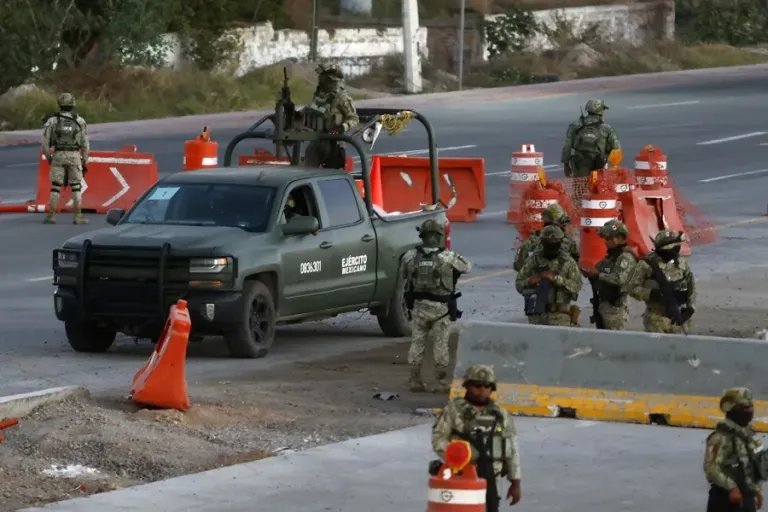
Added to the political controversy is the situation in which the state of Sinaloa (northwest) was left following the betrayal within the cartel of the same name, which sparked an internal war between factions that has left more than 3,000 murders and thousands of displaced people.
Despite the massive military deployment by the Sheinbaum administration to contain the situation, episodes of violence have not completely dissipated, as they are now more “sporadic” and have shifted to rural areas, according to a report published by the organization International Crisis Group (ICG) in June.
The conflict between criminal groups in Sinaloa, Mexico
The war is between the factions of Los Mayos, linked to the sons of Zambada, and Los Chapitos, of the offspring of El Chapo, who are disputing the leadership of one of the largest drug trafficking organizations in the world.
The security expert asserted that the authorities only have a “deterrent” presence, which is why he does not believe that criminal clashes will end in the short term.
“There is no arrest of the ringleaders of the criminal structure. The only thing there is, is a management, an administration of the conflict to try to reduce homicidal violence,” he lamented.
Saucedo perceives that the factions of the Sinaloa Cartel have “strengthened to finance the war,” while keeping their military structures “intact.”
More Read
Furthermore, their main leaders—such as Iván Archivaldo or ‘El Mayito Flaco’—remain at large and are sought by the Mexican government and Washington, which is offering a reward of up to 15 million dollars.
This joins the formal U.S. indictment against the governor on leave of Sinaloa, Rubén Rocha Moya, who was accused of allegedly working for Los Chapitos in exchange for bribes.