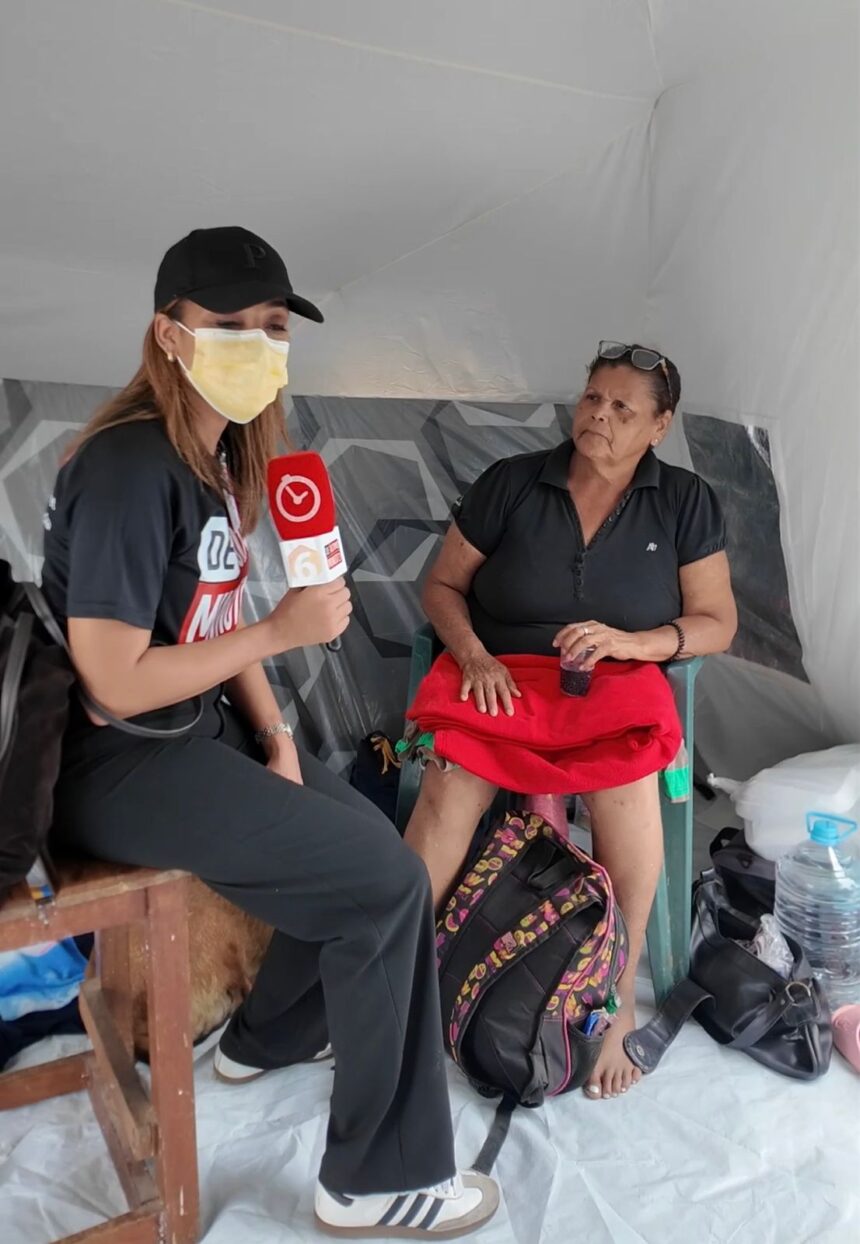
Catia La Mar, Venezuela.– Among the hundreds of families remaining in temporary shelters after the devastating earthquakes that shook La Guaira state is Doña Nora, a survivor who lost a large part of her home and who today faces the uncertainty of not knowing when she will be able to return to a home.
From one of the tents set up in Catia La Mar, the woman recounted that the earthquake caught her by surprise while she was participating in a prayer for a deceased person. At first, she thought it was a power outage, but within seconds she understood the magnitude of the emergency.
“At first we thought the power had gone out, but then everything started to shake. I fell to the floor and stayed there. The water tanks burst and we were surrounded by water until the earthquake ended,” he recalled.
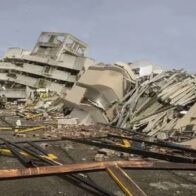
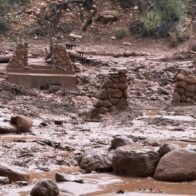
Upon leaving the place along with other people, she encountered a desolate scene. The back part of her home collapsed after the collapse of an adjacent house, leaving it practically uninhabitable.
“My house was destroyed. The entire back part collapsed; only the front part remained standing,” he explained.
More Read
Since the day of the disaster, she has remained sheltered with eight members of her family, including her husband and several grandchildren. Other relatives were also moved to makeshift shelters, as they try to reorganize their lives in the midst of the emergency.
The tragedy also left irreparable losses in her family circle. Doña Nora revealed that several relatives passed away after being trapped under the rubble.
“An entire family died on us. Yesterday they recovered the bodies and they were cremated,” she expressed, moved.
More Read
Amidst the uncertainty, the woman expressed concern for the safety of the minors remaining in the temporary camps, asserting that they have received warnings about alleged disappearances of children following the tragedy.
We recommend reading: Death toll rises to 3,535 and 16,740 injured due to earthquakes in Venezuela
“They told us not to leave the children alone because there are people who are taking them. We don’t lose sight of them for a moment,” she stated.

Although he acknowledges that the aftershocks have decreased, he asserts that fear remains present among the victims, who remain out in the open without knowing what their future will be.
“We have had two days without aftershocks, but we remain fearful because we no longer have a safe place to return to,” he said.
Regarding the official response, Ms. Nora maintained that local authorities promised to relocate the affected families, although so far that solution has not materialized.
“The governor and the mayor came once and said they were going to relocate us, but we are still waiting,” he pointed out.
More Read
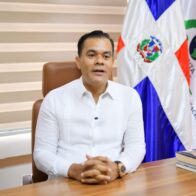
The survivor highlighted that a large part of the humanitarian aid received comes from international brigades and organizations, including delegations from the Dominican Republic and Chile, which have provided food, medicine, mattresses, and other basic supplies.
“Thank God we are receiving help from other countries. That solidarity is what has allowed us to keep going in these very difficult times,” he/she expressed.
Likewise, he indicated that one of the main challenges continues to be access to medication for people with chronic illnesses, a need that, according to him, has not yet been fully met.
Despite the difficult conditions, Doña Nora assured that she maintains hope of rebuilding her life together with her family and trusts that assistance will continue to reach the affected communities.
“Little by little we have been regaining our calm. What we want now is to have a home again and move forward,” he concluded.