Santiago.- A total of 160 young people completed their training in the Technological Development Program: Future Entrepreneurs 2026, an initiative promoted by the Center for Innovation and Professional Training (CAPEX), during a ceremony held at the Health Sciences Auditorium of the Pontificia Universidad Católica Madre y Maestra (PUCMM).
The graduation, corresponding to the 14th edition of the program, brought together authorities, business representatives, family members, and the new graduates, who were trained in areas related to application development, artificial intelligence, and introduction to security, with 240 hours of specialized training.
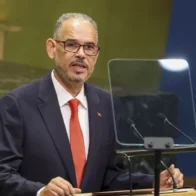
During the event, the president of the Foundation for Education, Training and Innovation (FUNCAPEX), Miguel Lama Rodríguez, highlighted that the program was born 15 years ago under the conviction that the country’s social and economic development is closely linked to the education and preparation of new generations.
Lama Rodríguez highlighted that, throughout these years, the program has trained 2,080 young people, whom he defined as stories and opportunities for personal, family, and national transformation.
We recommend reading: ASOFER promotes technical training to strengthen the renewable energy sector
More Read

“You have tools that no previous generation has had to such a magnitude: technology, knowledge, information, artificial intelligence, and the ability to communicate with the world,” he expressed.
However, he warned that technology alone does not transform society, but rather the people who use it with talent, curiosity, discipline, effort, and creativity.
He urged the graduates not to be afraid of making mistakes, asking questions, or thinking differently, considering that innovation begins precisely when a person dares to question the established and seeks new solutions.
More Read

“Innovating is not just inventing a technology; it is transforming an idea into a solution, a problem into an opportunity, and a concern into a business,” he stated.
For his part, the deputy director general of the National Institute for Technical Professional Training (INFOTEP), Luis Manuel Rodríguez, highlighted that excellence and commitment are fundamental pillars for promoting technical-professional training in line with the transformations of the productive world and the demands of the so-called Industry 4.0.
Rodríguez conveyed the congratulations of the INFOTEP general director, Mayra Morla, who was unable to attend the ceremony, and reaffirmed that institution’s commitment to continue supporting initiatives aimed at strengthening human talent in the Northern region.

The official highlighted that the young people completed specialized training in application development, artificial intelligence, and introduction to security, tools that, as he stated, can become platforms for generating new professional and business opportunities.
Meanwhile, the regional manager of AFP Siembra, María Aurelia Fernández, stated that the program not only allowed participants to acquire technological knowledge, but also to develop skills to think differently, solve problems, and use new tools responsibly.
Fernández especially highlighted training in artificial intelligence and cybersecurity, considering that both areas are fundamental for professionals and entrepreneurs who will have to operate in an increasingly digital environment.
More Read

“Do not view this graduation as the end of a program, but as the beginning of a new stage,” he urged the young people, whom he called to continue learning, take on challenges, and turn their ideas into actions.
Graduate calls for taking advantage of what has been learned
On behalf of the graduates, Justin José Santana spoke, who valued the formative process as an experience that transcended the acquisition of technical knowledge.
You can also read: Distributors say it is in 2026 that losses will begin to be reduced
Santana explained that during the training, participants had the opportunity to develop their curiosity, face challenges, and learn how to use new tools responsibly.
Among the main takeaways, the development of applications, the use of artificial intelligence, and the importance of cybersecurity stood out, in addition to the experiences and friendships that emerged during the process.
The activity concluded with the recognition of the young people who successfully completed the program, who are now called upon to turn the knowledge acquired into projects, ventures, and solutions capable of impacting their communities and contributing to the country’s technological and economic development.