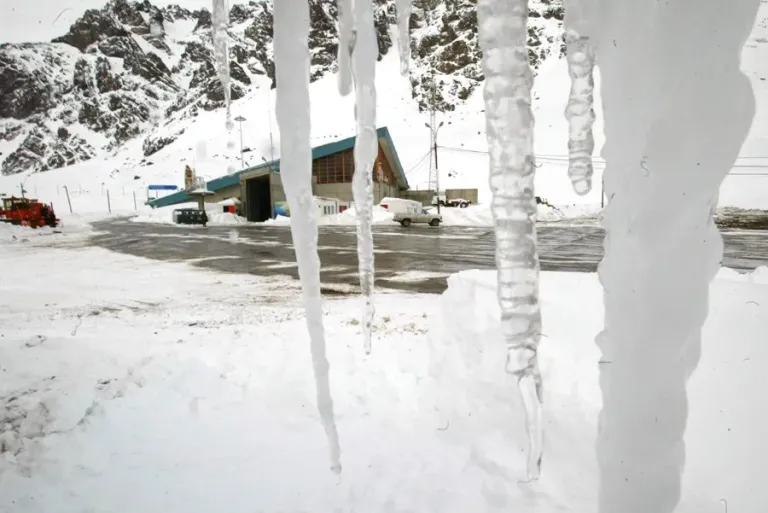
Santiago, Chile.- Authorities in Chile reported this Monday that conditions are still not met to open the Libertadores International Pass, the main border crossing with Argentina, which has been closed to traffic for 20 days due to snow accumulation resulting from the storm hitting the country.
The pass has been closed since last July 14 due to weather conditions, a period that represents the second longest closure after it remained out of operation for 26 days during the 2023 austral winter.
“The Los Libertadores border crossing remains closed due to weather conditions and the variables that determine safety and transitability,” the provincial presidential delegate of Los Andes, Ricardo Figueroa, told the Chilean press.
The provincial delegate explained that “the snow conditions do not allow us to open this important pass yet.”
The crossing has accumulated nearly 6.6 meters of snow and has also been affected by power supply interruptions, while weather forecasts for further snowfall are hindering current efforts to clear the route for its reopening.
More Read

The pass, also known as the Cristo Redentor International Pass, which crosses the Andes mountain range to connect the cities of Santiago (Chile) and Mendoza (Argentina), is a strategic corridor for supply, foreign trade, investment, and employment.
We recommend reading:

Chile is currently experiencing a new frontal system in the south-central zone of the country that has so far left two people dead due to associated events, following the intense storm it experienced in recent weeks, which covered ten of the country’s 16 regions and left 13 dead and more than 3,000 people affected.
More Read

Mass evacuations
The rains have caused a “flashpoint of tension” between the regions of Maule (center) and La Araucanía (south), as reported this Monday by the National Disaster Prevention and Response Service (Senapred), which ordered mass evacuations.
The agency, with the help of firefighters and Army personnel, evicted dozens of families in the commune of Angol, 565 kilometers south of the Chilean capital, and evacuated sectors of the Carahue commune, also in the La Araucanía region, affected by overflowing rivers.
“At the national level, there are ten red alerts and ten yellow alerts in place, mainly due to overflows and flooding,” detailed the director of Senapred, Alicia Cebrián.
The latest report from the emergency agency accounted for 1,399 affected people, 156 sheltered, 5,936 isolated, 27 homes destroyed, 685 with major damage, 4,838 with minor damage, and 1,052 under evaluation.
The Meteorological Directorate of Chile (DMC) projected that rainfall will extend over the next three months above normal precipitation indicators, in addition to the presence of the El Niño phenomenon active until the austral autumn of 2027.
Authorities have indicated that the frontal system that hit the country between July 14 and 21 was one of the “most significant recorded in recent decades.”