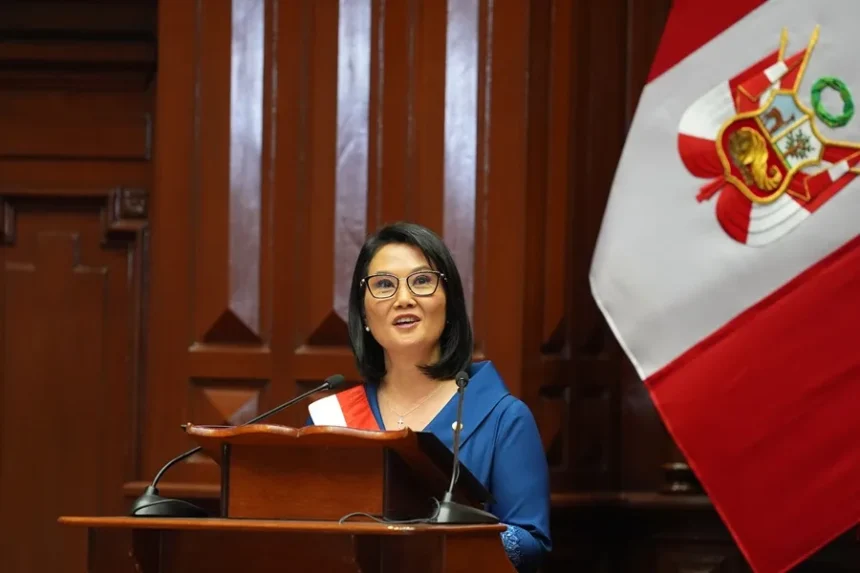
Lima.- The President of the Council of Ministers of Peru, Luis Galarreta, presented this Thursday before the Chamber of Deputies the general policy of the government of the Peruvian president, Keiko Fujimori, for the 2026-2031 period, which will have as priorities reducing citizen insecurity and vulnerability to natural disasters, increasing productivity, and consolidating democratic governability.
In his presentation before Congress, Galarreta reiterated that on July 28th they received a State in “total disorder” and “overwhelmed” by the country’s major problems, due to a lack of leadership and management, which is why he presented the five axes that encompass the priorities of the new government in Peru.
Reduce citizen insecurity
The prime minister said that the response against citizen insecurity will be “firm and sustained” with more operational capacity, intelligence, technology, and police presence in the territory.
“We are going to concentrate our efforts on the crimes that hit Peruvians the hardest: extortion, contract killing, organized crime, illicit drug trafficking, and illegal economies“, indicated Galarreta.
On that axis, the Executive included operations to identify foreigners in an irregular situation, with the support of the armed forces, as well as the construction of high-security prisons.
Natural disasters and climate change
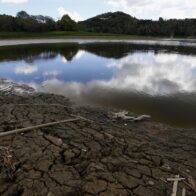
The government has already installed a National Commission for the Management of the El Niño Phenomenon to face the weather event, which has a forecast of strong to very strong magnitude in the coming months and until the beginning of 2027.

You can also read: Fujimori announces she will start applying the Bukele model:
In this sense, 536 critical points have been prioritized that require riverbed cleaning to reduce the risks of overflows and flooding due to the intense rains generated by El Niño on the country’s north coast.
Faced with rising sea temperatures, one of the effects of the phenomenon, they have also provided funding to protect fishing and the debt rescheduling for scallop farmers of fan.

At the same time, they will seek to strengthen the search and rescue capabilities of the Armed Forces, as well as air and maritime bridges to assist those affected by a potential disaster or major earthquake.
More Read

Strengthen the comprehensive development of citizens
Galarreta presented the Performance Incentive Fund, which will recognize regional governments that achieve concrete results in reducing anemia and chronic child malnutrition, preventing maternal mortality, and improving access to educational services and safe water.
It is estimated that by 2031, more than half of the Integrated Health Networks will be strengthened and prepared to provide more timely, comprehensive, and modern care. Likewise, the Executive branch has set out to reduce the prevalence of child labor in rural areas and eradicate the worst forms of hazardous child labor.
Increasing the country’s productivity
The Ministry of Economy and Finance has proposed presidential commissions to promote structural reforms to address labor informality, which affects 7 out of 10 Peruvian workers, deepen financial markets, expand financing sources for companies, increase the quality of public investment, and reduce tax evasion.
In that way, the Fujimori government will propose a tax agenda to simplify and provide stability, through the legislative powers it will request from Congress.
Consolidate the rule of law
The Executive “will not place unnecessary obstacles in the way of those who work, undertake, and invest“, but will instead create the conditions for the State to be “part of the solution and not part of the problem“.
In this sense, he affirmed that his commitment is to have strong institutions, respected democracy, protected rights, open dialogue, accountable accounts, and clear rules.