Washington.- The Donald Trump administration applauded this Thursday the start of in-person talks between the Chavista government of Venezuela and an opposition group in Caracas, a dialogue it defined as a “unique opportunity” for reconciliation and transition in the South American country.
The State Department stated in a press release that it welcomes the arrival in the Venezuelan capital of an opposition delegation led by former deputy Dinorah Figuera, to meet with Jorge Rodríguez, the chief negotiator for Chavismo and president of Parliament.
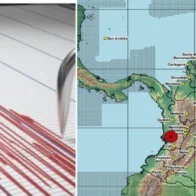
“These direct conversations represent a unique opportunity. We applaud the efforts to address the urgent needs of those affected by the June 24 earthquakes, expand political freedoms, and promote a more stable and prosperous future for the Venezuelan people,” expressed the U.S. government, which promoted this dialogue.
We recommend reading:
U.S. welcomes dialogue between the opposition and Chavismo in Venezuela
The Trump Administration said it maintains its “commitment” to support this process, which is part of the three-phase plan defined by Washington, which involves the stabilization of Venezuela, economic recovery, and democratic transition.
“We urge all stakeholders to support this effort to achieve tangible results for the Venezuelan people,” the note points out.
More Read

This Thursday’s meeting at La Carlota air base is the first in-person encounter between both parties, following the start of the dialogue process on August 1st in a phone call between Rodríguez and Figuera.
The leader of the majority opposition and Nobel Peace Prize laureate María Corina Machado, who has expressed her intention to return to Venezuela as soon as possible, is not participating in these talks promoted by the Trump administration, which has strengthened relations with the country’s interim president, Delcy Rodríguez.
Venezuelan opposition member Guanipa says dialogue can be an opportunity for freedom
For his part, Venezuelan opposition member Juan Pablo Guanipa said this Thursday that the negotiations between a part of the opposition and the Government, which continue today, could be “a historic opportunity” to achieve “freedom”.
More Read


In the video, shared on his X account, he also pointed out that the country is “expectant regarding the negotiations,” whose talks, backed by the United States, began with a phone call last Saturday, August 1st.
In his post, Guanipa asks that the dialogue respect “the spirit of what happened on July 28, 2024,” when the opposition denounced fraud in the presidential elections after the electoral body, controlled by Chavismo, proclaimed the now-deposed Nicolás Maduro president without publishing the detailed results.
“We need the release of all civilian and military political prisoners, a new TSJ (Supreme Tribunal of Justice), and an electoral schedule that includes presidential elections as soon as possible, with Maria Corina Machado as a candidate,” added Guanipa.
Union calls for conditions in the dialogue between opposition and Chavismo for “real democracy”
The National Union of Press Workers of Venezuela (SNTP) proposed 10 conditions this Thursday, including full freedom for those it considers to have been “persecuted for expressing themselves,” so that the dialogue between Chavismo and an opposition sector can achieve a “transition and a real democracy” in the country.
On X, the SNTP also called for an “end to surveillance and illegal device searches,” which includes stopping the inspection of phones, “cyber-patrolling, and the use of private information to persecute opinions or build political dossiers.”
Likewise, he called for an “end to stigmatization and reprisals for editorial reasons” and the unblocking of media, platforms, and digital tools.
More Read
Among the conditions, there is also transparency and effective access to public information, as well as equal access to media and communication spaces, and the restitution and sustainability of the media ecosystem.
In addition, he advocated for a reform of the laws and institutions used to “restrict expression,” for the transformation of state media into a pluralistic public service, and for effective protection for journalists and press workers.